Save big on kitchen essentials!

From Flames to Flavors: The Evolution of Human Nutrition and Society
Explore the Evolution of Human Nutrition, from fire and agriculture to global trade and modern gastronomy, and discover how cooking transformed human societies.
yumchefie
7/22/202611 min read
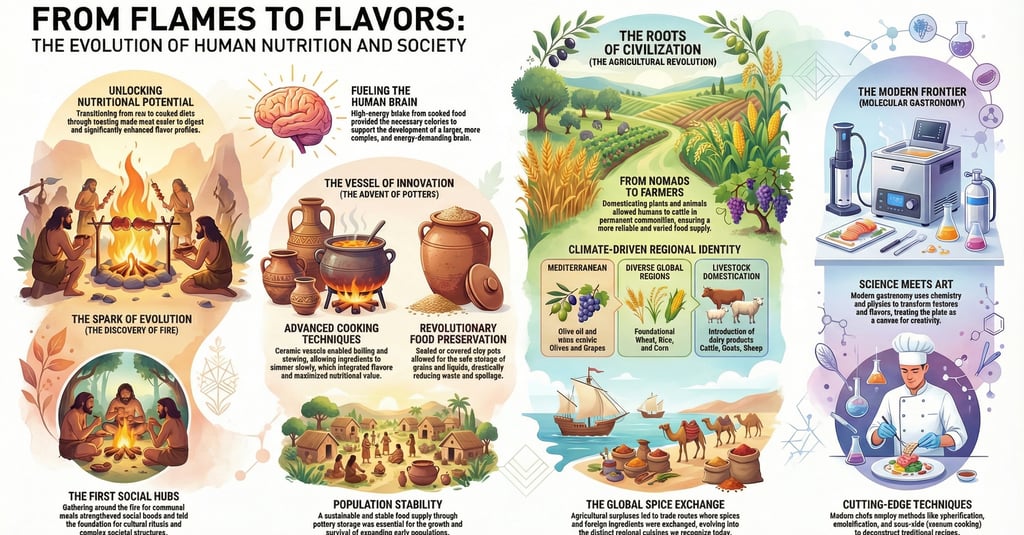
Introduction: The Transformational Power of Fire
The discovery of fire marks a significant turning point in the evolution of human nutrition and culture. This pivotal moment not only catalyzed changes in dietary practices but also profoundly influenced social organization and human identity. Before the ability to create and control fire, early humans primarily consumed raw foods, limiting their nutritional options and exposure to various flavors. The advent of fire enabled cooking, which unlocked a myriad of culinary possibilities and made food more palatable and safe for consumption.
Cooking with fire transforms the biochemical structure of food, leading to improved digestibility and nutrient absorption. For example, cooking meat can eliminate harmful bacteria, while starches become more digestible when heated. As a result, our ancestors could consume a wider variety of foods, enhancing their diets and providing the necessary nutrients to support brain growth and development. This advancement is closely intertwined with the evolution of human society, as enhanced nutrition fostered greater social interaction, communication, and collaboration within groups.
Furthermore, the mastery of fire brought about changes in culinary practices that have persisted through the ages. From the communal gathering around flames to the intricate rituals surrounding cooking methods, fire has served as a focal point in human experiences. It transformed not just the way food was prepared, but also how it was shared, establishing connections that formed the foundations of social structures. Traditional cooking techniques remain central to many cultures, reflecting the long-standing influence of fire on culinary heritage. Thus, the transformational power of fire extends far beyond nutrition; it shapes the very essence of human experience, intertwining our sense of identity with our relationship to food and community.
The Discovery of Fire: Cooking as a Catalyst for Change
The discovery of fire marks a pivotal moment in human evolution, providing an essential turning point in the development of nutrition and society. Early humans, primarily foragers, relied on raw foods, which often posed significant challenges regarding digestibility and safety. The harnessing of fire allowed these groups to transition from their reliance on uncooked ingredients to preparing meals that enhanced both flavor and nutrition.
Cooking not only made food tastier but also unlocked a myriad of nutrients previously locked within raw foods. The Maillard reaction, which occurs during the cooking process, not only creates enticing flavors and aromas but also may increase the bioavailability of certain nutrients, making them easier for the body to absorb. This discovery laid the foundation for a more nutrient-rich diet, facilitating greater energy availability necessary for early human development.
Moreover, the use of fire had profound social implications. Gathering around a fire for cooking fostered community interactions and strengthened social bonds. This communal aspect of cooking and eating contributed significantly to the formation of social structures and hierarchical societies. Anthropologists argue that cooking not only nourished individuals but also served as a vital component in the development of complex cultural practices, where food became symbolic of identity and social status.
Numerous historical anecdotes illustrate the revolutionary impact of fire on human diets. In many ancient cultures, the ability to cook meat made it possible to obtain the energy required for brain growth, ultimately contributing to the evolutionary advancement of Homo sapiens. As communities cultivated a culinary heritage shaped by fire, cooking evolved beyond mere survival and transformed into a cultural centerpiece, allowing societies to celebrate flavors, ritualize meals, and refine their gastronomic identities.
Fueling the Human Brain: Caloric Density and Intelligence
The evolutionary journey of humans is marked by several transformative developments, one of which includes our dietary adaptations. The transition from raw to cooked food has been pivotal, significantly influencing human growth and intelligence. Cooking not only enhances the flavor of food but also makes nutrients more accessible. Archaeological evidence suggests that the advent of cooking coincided with a marked increase in brain size, indicating a strong link between caloric density and cognitive capabilities. The energy extracted from a cooked meal surpasses that from its raw counterpart, providing essential fuel for the human brain.
Research indicates that larger brains require more energy, necessitating a nutrient-rich diet to sustain increased cognitive functions. The primary component fueling this demand has been calorically dense foods, particularly those derived from meat and starchy plants. Cooking these foods breaks down cellular structures, allowing for improved nutrient absorption and reducing the time required for digestion. The increased caloric intake from cooked food likely supported the development of larger, more complex brains, which, in turn, facilitated advanced problem-solving skills, social interaction, and cultural developments.
Additionally, studies in anthropology highlight the significance of social cooking practices, suggesting that meals became a communal activity. This social aspect not only reinforced social bonds but also allowed for the sharing of knowledge, experiences, and culinary techniques, further fostering cognitive growth. The importance of caloric density extends beyond mere sustenance; it is a crucial factor that has shaped not only individual survival but also societal evolution. The interrelationship between the cooking of food, caloric density, and brain development illustrates how dietary changes have played a critical role in the trajectory of human intelligence.
The First Social Hubs: Community, Connection, and Cuisine
The advent of communal fires marked a pivotal development in early human societies, acting not only as a source of warmth and protection but also as a gathering point for social interaction. These communal fires became the heart of social life, where individuals from small tribes would converge to share not just food, but stories, experiences, and companionship. Food played a crucial role in these gatherings, transforming mere survival into a celebration of community and connection.
Rituals surrounding communal dining emerged as vital expressions of cultural identity. Shared meals often included cooked meats, gathered fruits, and foraged grains, served in ways that underscored the meaning of togetherness. These occasions were not only about nourishment but were instrumental in fostering bonds and establishing group cohesion. The act of preparing and consuming food collectively laid the groundwork for the intricate social networks that developed in these early societies.
The significance of food as a social connector cannot be overstated. Meals shared around the fire facilitated the transmission of knowledge, enabling older generations to pass down traditions, culinary skills, and narratives that bound the community together. These gatherings forged not only alliances but also a sense of belonging, where individuals found shared identity through the act of eating together. Furthermore, the flavors associated with these early meals would often carry cultural connotations, representing the unique practices and preferences of each tribe.
Overall, communal dining practices and the rituals surrounding them illustrate how food acted as a catalyst for relationship-building in primitive societies. The bond formed over shared meals extends beyond mere physical sustenance, embodying the essence of community and connection that continues to resonate in modern culinary practices today.
The Advent of Pottery: Revolutionizing Food Preparation
The introduction of pottery marked a significant milestone in the evolution of human nutrition and played a crucial role in the development of early culinary practices. Pottery, with its durable and heat-resistant nature, enabled societies to explore new cooking methods such as boiling and stewing, which were previously unimaginable. The innovation of ceramic vessels allowed for the transformation of raw ingredients into palatable dishes, effectively broadening the diet of early humans.
Prior to the advent of pottery, food preparation was limited to techniques that did not involve thorough cooking, often resulting in the consumption of meals that lacked flavor and diversity. The creation of pots and bowls provided the means to not only cook but also preserve food, which significantly impacted storage practices. This advancement dramatically reduced waste, as it allowed for longer-term storage of cooked and uncooked ingredients, minimizing spoilage and fostering food security within settled communities.
Furthermore, pottery facilitated more complex culinary expressions, as it enabled the mixing of various ingredients and the experimentation with new flavors. The techniques of simmering soups and stews and baking foods in clay vessels showcased an increasing sophistication in culinary arts. This emerging variety of dishes not only enhanced individual diets but also enriched social interactions through shared meals and communal cooking practices. Such developments played a pivotal role in establishing social structures and fostering relationships among members of early societies.
The implications of pottery went beyond mere cooking; it paralleled the advancements in agriculture and contributed to the establishment of more permanent settlements. As communities became increasingly sedentary, the stability provided by efficient food preparation and storage methods allowed populations to grow. This interplay between pottery and food preparation revolutionized early human nutrition, laying the groundwork for the rich culinary traditions that would emerge in later civilizations.
Population Stability: The Rise of Settled Life
The transition from nomadic lifestyles to settled agricultural communities marks a pivotal moment in human history. With the advent of reliable food storage solutions, populations began to experience increased stability, allowing groups to cultivate land and settle in one place. The ability to store surplus food enabled communities to withstand periods of scarcity, fostering a sense of security that was previously unattainable when food availability relied solely on hunting and gathering.
As agricultural practices improved, the reliability of food sources became a cornerstone for population growth. Communities were no longer vulnerable to the whims of nature; instead, their ability to produce and store food created a favorable environment for burgeoning populations. This food security not only facilitated the increase in numbers but also prompted advancements in societal structures and technologies. As families grew and communities expanded, the demand for organized governance emerged to maintain social order and manage resources effectively.
Case studies of early agricultural societies, such as the Mesopotamians, provide insight into how stable food supplies catalyzed the formation of complex societies. In these regions, innovations in irrigation and crop rotation were crucial for maximizing yield, which in turn led to economic specialization. Consequently, with more people engaged in trade and crafts, the social fabric began to weave intricate cultural identities, ultimately leading to the establishment of cities and more formalized systems of governance.
The connection between food security and societal development underscores the profound impact that reliable nutrition has had on human history. As settled life took root, the fundamental concepts of community and government began to evolve, paving the way for the civilizations that would dominate the future.
The Agricultural Revolution: Transitioning to Civilization
The Agricultural Revolution, often regarded as a pivotal moment in human history, represents the transition from nomadic hunter-gatherer societies to settled farming communities. This period, occurring approximately 10,000 years ago, was marked by significant advancements in our approach to food production. The domestication of plants and animals was a crucial innovation, allowing groups to cultivate various crops and raise livestock, thus providing a more stable food supply compared to the uncertain availability of wild resources.
With the development of agriculture, human beings began to settle in one location, leading to the establishment of permanent structures and the concept of land ownership. The fertile lands of the Fertile Crescent, for instance, became bustling centers of farming that supported larger populations than ever before. This shift enabled communities to thrive, facilitating the growth of social structures and governance, which fostered the emergence of complex societies.
The transformation of food practices during this era had far-reaching implications not only for nutrition but also for social interaction and cultural development. As communities grew, so did their reliance on specific crops and livestock, which shaped their culinary traditions, religious practices, and economic exchanges. The surplus of food produced through agriculture allowed for specialization, where individuals could engage in not only farming but also craft, trade, and administrative roles, leading to diverse societal roles and economic systems.
Moreover, with the establishment of agricultural practices, trade networks began to form, connecting different communities. This exchange of goods, including not only food but also knowledge and technologies, fostered cultural exchanges that contributed to societal evolution. As societies became more interconnected, the sharing of agricultural techniques facilitated regional adaptations, optimizing food production methods across various environments.
Climate-Driven Regional Identity: The Diversity of Cuisines
Throughout history, human nutrition has been significantly shaped by the diverse climates encountered across the globe. This climatic influence has not only molded the availability of ingredients but has also played a crucial role in the cultural identity of regions and communities, leading to the unique diversity found within culinary practices. The Mediterranean region, for instance, is synonymous with its abundant use of olive oil, a staple that thrives due to the warm climate and rich soil. This ingredient is central to numerous dishes, embodying both the region's agricultural heritage and its social traditions.
Another major impact of climate on regional cuisines can be observed through staple grains. In colder climates, such as those found in parts of Northern Europe, wheat and barley have become predominant due to their hardiness in adverse weather conditions. In contrast, in warmer regions of Asia, rice has established itself as the primary grain, benefiting from the abundance of water and heat. This stark contrast reflects not only the adaptability of human agriculture but also the dietary preferences that evolve concordantly with local environmental conditions.
Moreover, livestock domestication has been heavily influenced by geographical factors. In more arid areas, herding animals such as sheep and goats have become critical resources due to their ability to thrive in challenging terrains. This contrasts with regions that boast rich pastures where cattle can graze, exemplifying how climate shapes food sources and, consequently, cultural dietary practices. Each region’s unique climatic profile orchestrates a symphony of flavors that embodies its cultural identity, ensuring that the culinary landscapes are as diverse as the climates that yield them.
The Global Spice Exchange: Trade and Culinary Diversity
The history of the global spice exchange is deeply intertwined with the evolution of human nutrition and society. Spices, once considered rarities and status symbols, have played a crucial role in shaping culinary practices across the world. The initial surplus of agricultural production, coupled with the innovative techniques of preservation and transportation, paved the way for the spice trade to flourish. From the rich peppercorns of India to the aromatic cinnamon from Sri Lanka, these unique flavors quickly traversed continents, creating a tapestry of global cuisine.
As trade routes expanded, spices became a form of currency, influencing diplomatic and economic relations among emerging powers. The quest for spices was not merely about flavor; it merged culinary practices with trade ambitions. Regions such as the Mediterranean, the Middle East, and Southeast Asia became pivotal nodes in this exchange, where diverse culinary traditions intertwined and evolved. Interestingly, this intermingling of flavors often reflected deeper cultural connections. For instance, the introduction of spices like chili peppers to Asian cuisine revolutionized local culinary styles, enhancing dishes and launching new gastronomic trends.
This ongoing interaction gave rise to regional cuisines that are remarkably diverse, yet noticeably influenced by a shared history of trade and discovery. For example, the intricate use of spices found in Moroccan tagines demonstrates the legacy of the spice trade and its integration into local dietary customs. The global spice exchange exemplifies how food acts as a bridge in fostering cultural understanding and cooperation, bringing communities together through shared culinary experiences. Overall, the evolution of trade in spices underscores the profound impact of ingredients on both nutrition and the cultural fabric of societies around the world.
The Modern Frontier: Molecular Gastronomy and Culinary Innovation
The intersection of science and culinary arts, known as molecular gastronomy, has revolutionized the way we perceive and experience food. This contemporary movement embraces modern scientific techniques to deconstruct traditional dishes and reconstruct them in innovative ways. Chefs, equipped with knowledge of molecular physics and chemistry, transform ingredients through various processes, such as spherification, emulsification, and gelification, leading to unexpected textures and flavors.
Molecular gastronomy not only enhances the visual and sensory appeal of dishes but also challenges diners’ expectations. By integrating elements, such as foams, edible gels, and liquid nitrogen, chefs create dining experiences that evoke curiosity and surprise. This innovative approach aligns with evolving societal trends, where food is increasingly viewed as an art form rather than merely sustenance. The aesthetic presentation and dramatic effects of molecular gastronomy contribute significantly to dining culture, inviting guests to engage actively in their culinary experience.
Conclusion: The Journey of Food from Survival to Artistry
The evolution of human nutrition is a remarkable journey that reflects not only the development of culinary techniques but also the intricate relationship between society and food. Initially, the primary focus was on survival, where our ancestors relied on foraging, hunting, and basic food preparation methods to ensure sustenance. Over time, these necessities transformed into a sophisticated exploration of flavors, textures, and presentations, leading to the rich tapestry of modern gastronomy we enjoy today.
This transition from mere survival tactics to the artistry of food preparation highlights the deep connection humans have forged with their culinary practices. As civilizations evolved, so too did their cuisines, influenced by geography, culture, and available resources. The fusion of diverse gastronomic traditions has resulted in a vibrant culinary landscape, showcasing the creativity and innovation inherent in human nature.
Looking toward the future, the journey of food continues to evolve. Factors such as technological advancements, environmental concerns, and shifting societal norms are influencing the way we produce, prepare, and consume food. Innovations like lab-grown meats and sustainable farming practices promise to redefine our culinary landscape and address pressing global challenges. As we navigate this new era, the potential for food to impact society, culture, and the environment is both exciting and critical.
Ultimately, the journey of food from mere survival to a form of artistry underscores the importance of nutrition in our lives. It invites us to reflect on our cultural heritage while also considering the future of our culinary innovations. The complex relationship between what we eat and who we are continues to shape our identities, reminding us that food is not only sustenance but also a canvas for creativity and a means of connecting with one another.
Yumchefie Code : 5588889
Your intelligent kitchen companion. We use advanced AI to help you reduce food waste, discover new flavors, and cook with confidence.
Contact
Subscribe
Copyright © 2026 - YumChefie